Tuesday, June 12, 2012

Rotation for Sox Needs Upgrade


To say that the 2012 Boston Red Sox season has been a tumultuous roller coaster thus far would be a disservice to everyone involved with the team.  Although they somehow sit a mere 6.5 games behind in the AL East, the team has shown no signs of making any serious runs this season.  It was just one year ago that this “super” team was the toast of Major League Baseball, destined to manhandle any opponent that would come its way. 


The epic September collapse has come and gone.  The pitching staff, which floundered profusely down the stretch last season, has been a disappointment thus far to say the least.  While the offense has struggled, largely due to the absence of the starting outfield, the starting pitching continues to trend downhill.

Since they won the World Series in 2007, the pitching staff has progressively gotten worse.  After allowing 657 runs in 2007, the number went up to 737 last season.  The team is already at 290 runs allowed this season, ranked just above the Twins for second to last in the AL. 

Instead of progressing with a young core of Jon Lester, Josh Beckett, and Clay Buchholz  since its championship 2007 campaign, the staff has bottomed out this season.  Here are all of the culprits.

Josh Beckett: Often cited as the main offender of the “Chicken & Beer Gate” from last season, Beckett has distanced himself from the media and fans effectively by telling fans he earned all of the days off (this was after he was spotted golfing after being scratched from a start).  Not only has Beckett become one of the most highly unlikeable “star” Boston athletes in recent memory, his play has become rather average.  Average play would be fine for a third a fourth starter, not for a former World Series MVP who just signed an extension through 2014.  He’s also prone to a half dozen injuries a year, is on the wrong side of 30, and has had his physical condition questioned numerous times.  His fake tough guy routine has always seemed like a complete façade, and now that he has treated the fans (who help pay his salary with high ticket prices) with complete disdain, a 4.14 ERA from a supposed ace this season makes him all the more intolerable.  After getting swept at home and dropping its record to 14-19 at Fenway Park, the Red Sox were looking for an “ace-like” effort from Beckett against his old team, the Miami Marlins.  Facing the Marlins stud of the future, Josh Johnson, the other Josh submitted a pedestrian line of four earned runs in seven innings pitched.

Jon Lester: Expected to be the team’s top pitcher and go-to performer in recent seasons, Lester has faltered in poor fashion this season.  After falling from grace last September, Lester has failed to pick up his play this season, seeing his ERA rise to 4.57 this season.  Last season, despite his September struggles, it was at 3.47.  His hardened demeanor has always resonated well with fans, but has often seemed to sidetrack him at times.  After getting squeezed by umpires, instead of narrowing in on hitters, Lester has let it get to him.  He tends to lose his focus, and by the end of a poor inning, can usually be seen glaring back at the home plate umpire.  If he wants to fully realize his potential as one of the games dominant pitchers, Lester has to mature beyond the missed the calls.  His decreased velocity is also a major concern.

Clay Buchholz: Somehow has six wins on the season, in spite of 13 homeruns allowed and a 5.77 ERA.  Buchholz went from phenom in 2007 (tossing a no-hitter as a 22 year old), to a bust in 2008 (posting a god awful 6.75 ERA in 15 starts.  Baseball experts decried his 17-win campaign in 2010 due to his low strikeout to walk ratio.  A former first round pick, Buchholz has been dreadful this season, although he has shown significant improvement of late.  He has allowed four earned runs in his last 24 innings pitched, including a complete game shutout in his last start against Baltimore.

Felix Doubront: Perhaps biggest bright spot of the rotation thus far, the 24 year old southpaw from Venezuela has taken hold of the No. 4 spot with some solid pitching performances.  Although he has rarely been overly spectacular this season, it would be hard for the Red Sox to ask more from a pitcher who had only started two games in his career at the major league level before this season.  While he may have some control issues, Doubront’s 9.8 strikeouts per nine innings is surely impressive.  The Red Sox may have a future No. 3 starter in Doubront.

Daniel Bard: What has been said about Doubront unfortunately can’t be said about Bard.  Mysteriously converted from a setup man to a starter this season – even after Jonathan Papelbon left for Philadelphia – Bard was recently sent down to AAA Pawtucket after submitting one of the worst pitching lines in recent memory: 1.2 innings pitched; 5 earned runs; six walks; two hit batters.  The one positive; one hit allowed.  One of the best bullpen pitchers in all of baseball just two years ago (and one of the games young stars in the making), Bard has fallen fast from grace.  His mechanics look like a mess, and he doesn’t seem to throw the ball with as much force as he once did.  Couple that with the fact that he has been deemed relatively fragile mentally, one has to hope that Bard can regain the same filthy stuff he once had, whether it be as a starter or reliever.

Daisuke Matsuzaka: Even though he just completed his first start of the season (a not-so-bad showing against Washington), Daisuke deserves to be raked over the coals just as much as the other members of the staff.  If not for the John Lackey experiment, Daisuke may have been considered Theo Epstein’s worst mistake (also see: Lugo, Julio; Drew, J.D.; Jenks, Bobby; Crawford, Carl).  After the Red Sox posted a ridiculous posting fee just to speak with him, Daisuke has stolen a large majority of his $52 million salary.  Daisuke has gone from 61 games started in 2007-08, to 45 in his last four years of service.  A nibbler to say the least when it comes to throwing strikes, Daisuke has allowed a whopping 302 walks in 627 innings, good for a career 4.3 walks per nine inning ratio.  Perhaps Manager Bobby Valentine’s stint as a successful Japanese manager can help Daisuke become half the starter the Red Sox envisioned when they signed him.             

Thursday, June 7, 2012

Spurs - Thunder Game Six Log (2nd Half)


Oklahoma City Thunder Power Forward Serge Ibaka (9), From The Republic Of Congo, Blocks A Shot By San Antonio Spurs

The Spurs and Thunder battled for Western Conference supremacy Wednesday night in Oklahoma City. I picked up the game less than five minutes into the second half with the Spurs leading 65-59.

- Spurs call timeout. OKC crowd is like a rowdy Division I college crowd - loud, drunk, and always standing.  

- Thunder are on 11-2 run to start third quarter. It's clear that Spurs interior defense is non-existent outside of Duncan.

- Speaking of Duncan, he just threw one down like it was 2003; temporarily stopping the bleeding.

- Westbrook offensive foul off of the ensuing TV timeout. It's clear that this team is at its best when Durant is moving with the ball, as well without it. Westbrook still hasn't found the right balance between being aggressive and setting up Durant. Scary to think about since this team is just getting started together.   

- Perk leads a fast break. Repeat: Perk leads a fast break. Spurs lead 71-64 with five minutes left in third.  Danny Ainge's trade of Perk doesn't look as bad as it once did. Perk is allergic to scoring and can't defend the pick and roll. He doesn't have a heart problem, though.   

- Stephen Jackson doing "Stephen Jackson" things. Hits corner three to silence crowd for the moment, stares at the Thunder bench while jogging back, and is subsequently hit with a technical foul for...staring? Reggie Miller, the color commentator for the game, even said that he did that all the time. "Miller Time" would've been thrown out every time he stepped foot inside Madison Square Garden. Will chest bumping be outlawed next?

- Durant slices through the D like a hot blade through butter; too easy. 

- Jackson answers back with gigantic three; 77-74 Spurs, three minutes to go in third. It should be a mandatory rule that Jackson be placed on a contender every spring, preferably in San Antonio. The guy was meant to hit big shots.

- Parker goes from playing like an MVP in the first half, to playing too tight in the second half. After a 21 point, ten assist first half, Parker goes for eight and two in the second half. Four of those second half points came as end of the game desperation layups. For as much as Boston fans purge over Rondo's inconsistencies (not that bad), Parker is much worse for Spurs fans. In his defense, Westbrook is a killer physical match up for any point guard.

- Durant hits a killer cold blooded crossover three, and OKC take the lead. It would be shocking if the Spurs win this game. That's how good the Thunder are playing, and the confidence you see on the court. From a basketball fan's perspective, this game is gold.

- Parker hits first field goal of second half off of pretty spin move and finger roll. Like Rondo, Parker is at his best when sneaking through the paint.

- Durant three puts Thunder back on top 81-80. Durant is transforming from ultra-gifted scorer/great teammate to a bona fide game changer/killer playoff performer. His movement without the basketball makes him that much more dangerous. Props to Scott Brooks for doing something more than iso's.  

- Popovich = Not angry at Craig Sager and his suit.

- Thunder have all of the momentum going into the final period. Spurs look surprisingly jittery and nervous, Manu in particular.

- Popovich decides to go ultra small with Gary Neal, Manu, Kawhi Leonard, Jackson, and Boris Diaw down 84-82 and ten minutes left. 

- Too small. Durant and Thunder have no deterrents going to hoop. Duncan is brought back into the game a minute later.

- Can't believe I'm saying this, but Spurs body language looks defeated and tired, while Thunder are playing like a game of NBA Jam.

- Tiago Splitter enters game; Tiago Splitter fouls Durant; Tiago Splitter gets an earful from Pop and leaves game. Thank you, come again.

- Durant takes an offensive foul with eight minutes left in the game. If you're a Spurs fan that is a death sentence, as that was Durant's - count it - first charge taken this season.

- 88-84 Thunder.

- Westbrook is fouled on a phantom call. For some reason, the Thunder are already getting beneficial/favorable calls from the officials. This has me fearing the potential Celtics-Thunder match up. 

- Spurs put on a clinic in the first quarter, played an even second quarter, and were out-gunned, out-jumped, and out-hustled in the second half.

- The Thunder are deadly when put in the bonus. Ibaka is worst crunch time free throw shooter this postseason at 76 Percent.

- Duncan pulls off a vintage spin and hook off the glass over his left shoulder, but Derek Fisher hits a corner three; 96-93 Thunder with 3:30 left. No one could have predicted that Fisher would be playing crunch time minutes for the Thunder at the beginning of the season, and still be hitting annoyingly big shots. Fisher is one of the most overrated/underrated players from the past decade, a Robert Horry lite if you will.

- "Big-Game James" hits huge three; 99-93 Thunder. Spurs are like a grizzled boxing legend getting pummeled in the 15th round (reacting instead of acting); basically just hoping to land a haymaker or two.

- Westbrook grabs own rebound off of own missed free throw. Has to be disappointing for Pop to see that.

- Parker splits two defenders and puts in a difficult reverse layup; Spurs down 101-97 with two minutes left. 

- Fisher hits a tough bank shot (still hard to believe that he's playing crunch time minutes), and Parker misses a baseline jumper that has Thunder ready to win...until Perk misses an open ten-foot jump shot.

- Perk, however, makes up for his miss with a dunk from a slip of a pick and roll. Game. Set. Match. 107-99 final.

- Tough to see Duncan lose like this. Hope he doesn't ride off into the sunset just yet.

- Spurs role players failed to step up after Game Two (minus Jackson). Duncan also was teams only interior presence against a physically imposing Thunder front court.

- Thunder played possessed in the second half, shooting 50 Percent from the field for the game. Brooks has found a nice rotation, and is finally getting more from his players outside of Durant iso's. They will be considerable favorites against whichever team comes out of the East.

- In related news, Sonics fans misery continues vigorously.

Friday, June 1, 2012

MLB Season Littered with Surprise


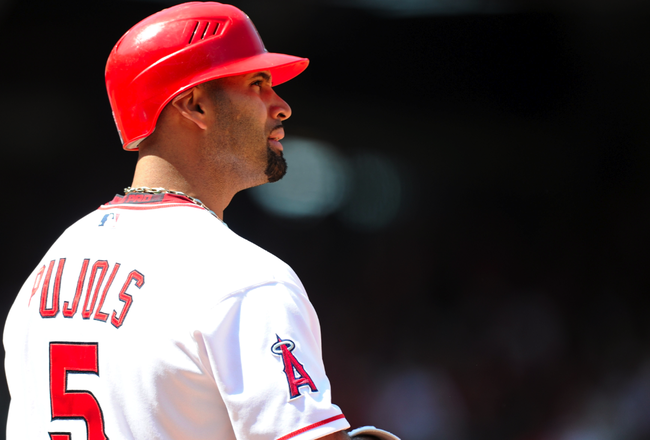
More than one-quarter of a way through the 2012 Major League Baseball season, there have been an ample amount of surprises. The four teams with the highest payroll this season – Yankees, Phillies, Red Sox, Angels, in that order – own a combined record of 98-94. Baseball’s prized free agent acquisition and the Angels $240 million dollar man, Albert Pujols, is currently on pace for his worst statistical season of all time. Boston’s big free agent pickup last season (take a guess, it’s not Carl Crawford), Adrian Gonzalez, has an OPS of .749, his worst since 2005 when he was a part time player with Texas.

Mariano Rivera, the game’s all-time greatest closer (and someone who is not a human being), went on the season-ending disabled list after tearing his ACL shagging fly balls in the outfield of Kansas City’s Kaufmann Stadium. This was supposed to be Rivera’s swan song; instead, he will attempt to battle back at the ripe age of 42 to take the mound next season at Yankee Stadium.

Speaking of injuries, the Philadelphia Phillies look like a battered and bruised bunch. Jimmy Rollins is batting .225 on the season, Ty Wigginton and Freddy Galvis have replaced the Ryan Howard/Chase Utley combo (Utley may never be the same, no matter when he comes back), and Roy Halladay exited his previous start with shoulder soreness after two innings.


On the other side of the diamond, the Baltimore Orioles and Los Angeles Dodgers – two teams who had minimal expectations entering the season – are restoring some luster and excitement for two baseball hungry cities. The Orioles have succeeded due to their young stars – Matt Weiters, J.J. Hardy, and Adam Jones – emerging as big time players, as well as a bullpen full of scrap heaps help bring down a team ERA of 3.54.

Led by all-stud Matt Kemp, the Dodgers have stunned the city of angels with the best record in the major leagues thus far. Andre Ethier has had a resurgence of sorts just in time for his free agency turn, and the promotion of 31 year old A.J. Ellis to full time catcher has proved dividends. Los Angeles may have the best position player-pitcher combo in the game in ace Clayton Kershaw and the aforementioned Kemp.

Perhaps we are seeing a fundamental shift in how teams will operate in the future, more specifically, valuing the development of younger players and not overpaying for aging talent.

The Nationals and Rays have taken that approach (minus the Nats’ ridiculous deal to Jayson Werth). The Rays have placed a premium on young pitching, cheap free agent options, and building around a few position players. Meanwhile, the Nationals lucked out by nabbing superstars in the making, Stephen Strasburg and Bryce Harper in the draft, and building one of the best starting rotations in the majors through the acquisitions of Gio Gonzalez and Edwin Jackson, and the continued emergence of Strasburg and Jordan Zimmermann.

Even the managers – Joe Maddon and Davey Johnson – have brought a stability and easy going style that has translated into success for both ball clubs.

There may be more to building a successful team than simply throwing dollars at the next “big” free agent, particularly if that free agent is on the wrong side of 30. We’ve seen it with the highest paid clubs; Adrian Gonzalez with the Red Sox, Mark Teixeira with the Yankees, Albert Pujols with the Angels, and Ryan Howard with the Phillies.

Let’s see if the Orioles, Dodgers, Rays, and Nationals can hold their ground this season.

Five Up/Five Down: Here my five biggest surprises and five biggest disappointments thus far this season.

Surprises
Josh Hamilton – Far and away the league leader in homeruns with 20, and sporting an absurd OPS of 1.175, Hamilton is having the best possible start to a contract year that someone can possibly have. One has  to worry about his health (he’s only played in more than 133 games once in five years) and the toll that playing center field in the sweltering summer heat of Texas will do to his body. In the meantime, sit back and marvel at the leading MVP candidate.


Brandon Beachy – The Braves sure do know how to find good pitching, don’t they? While the rest of the rotation has been up and down a bit this season, Beachy is sporting a nice 1.77 ERA as a starter. The Braves signed the undrafted free agent from Indiana Wesleyan University in 2008, and thrust him into the starting rotation last year, where he started 25 games and posted a respectable 3.68 ERA. In a difficult NL East, the Braves will need everything that the young Beachy has this season.

Paul Konerko – Not that anything resembling 30 homeruns, 100 RBIs, and a .300 batting average is ever a shock at the end of the season, it’s the amazing anonymity that Konerko operates under. Konerko is hitting .395 on the season, repeat .395; this coming from a 36 year old often overlooked by bigger names at first base. The White Sox have played above expectations this season, thanks in due part to Konerko.

Gio Gonzalez – I certainly thought Gonzalez was good, but perhaps not this good. Currently leading the majors in strikeouts with 79, Gonzalez is leading the surprise first place Nationals with a 2.04 ERA. Also leading the league in H/9 (hits per nine innings), Gonzalez has put to rest any concerns the Nationals had about his control issues, as well as transitioning from Oakland to Washington.

Melky Cabrera – An incredible steal in the offseason for the Giants (Jonathan Sanchez’s injuries and inconsistencies were maddening), the overlooked outfielder is leading the league in hits, thus far. With an OBP over .400, and somehow still just 27 years old, Cabrera should command the outfield in San Francisco for the foreseeable future.

Disappointments
Albert Pujols – As mentioned above, Pujols is experiencing the worst start to any of his 12 seasons. Not only is he hitting .232, he’s not getting on base (13 walks in 212 plate appearances), and his usual power has been absent (just seven homeruns through 49 games). Pujols has another 10 years in Los Angeles, so Angels fans should get used to seeing Albert in the lineup, regardless of how he is performing.

Rickie Weeks – With Prince Fielder gone from Milwaukee, Weeks was supposed to help pickup a lot of the production that Fielder took with him to Detroit. Instead, Weeks has arguably been one of the worst players in the league this season. Second in the league with 62 whiffs, Weeks has hit a putrid .156 this season. With a mere 26 hits through 48 games, Weeks has not helped a Brewers team expected to contend this season.

Tim Lincecum – Perhaps the innings and aggressive throwing have caught up to Lincecum and his diminutive frame, but he is experiencing a year no one could have expected. Sporting a hideous 6.41 ERA and a walk rate that keeps on climbing, it has been noted that his velocity has been down this year to a fastball that reaches 90 miles per hour. The Giants need Lincecum to be better if they want to even contend for a wild card spot.

Geovany Soto – It was just a few years ago that the catcher from Puerto Rico earned an all-star bid and a rookie of the year award. Since his breakout campaign in 2008, Soto’s stock has consistently worsened. After hitting .228 in 125 games last season, Soto has hit .161 in a mere 28 games played, and is currently on the disabled list. One has to wonder whether the young Cubs will feature the 29 year old Soto as its catcher of the future.

Heath Bell – Buyer beware; never overpay for a closer, especially one who found success in San Diego’s pitching haven, and one who has battled weight issues his career. After the Jose Reyes and Mark Buehrle signings, Bell was the closer that would complete the Miami Marlins massive overhaul. Instead, Bell has floundered to the point that Ozzie Guillen has removed him from save situations (although Bell remains the closer, according to Guillen). Nearly allowing a run per inning (16 in 18 innings pitched), Bell’s $27 million dollar deal is looking uglier than the Marlins uniforms right now.